Air conditioner repair in Tucson
If your AC is blowing warm air or has ice on the lines, a licensed local HVAC technician can usually find the cause in one visit. Many summer failures are inexpensive electrical parts, like a capacitor or a contactor.
On this page
What usually goes wrong
A Tucson system runs long hours from May into October. Tucson International Airport averaged 78.9 days at 100°F or hotter a year over 2016-2025, and in July the average low is now 77.6°F, so the compressor gets little rest even overnight. Long run hours are hard on the electrical parts.
- Capacitor. It gives the compressor and fan motor the kick to start. A weak one often shows up as an outdoor unit that hums but doesn't start, or a fan that isn't spinning. Fixr lists capacitor replacement at $100 to $400.
- Contactor. The switch that turns the outdoor unit on. A pitted or stuck contactor can leave the unit dead or running nonstop. This Old House lists relay and contactor work at $100 to $450.
- Condenser fan motor. If the fan on top of the outdoor unit isn't turning, the unit can't shed heat and will shut itself off. This Old House lists fan motors at $300 to $800.
- Refrigerant leak. Warm air plus ice on the copper lines or indoor coil often points here. Adding refrigerant without finding the leak means paying again next summer. Fixr lists leak repair at $200 to $1,500.
- Clogged drain line. Water around the air handler, or a stain on the ceiling below it. Usually a quick fix if caught early.
- Compressor. The expensive one, $600 to $3,000 according to Fixr. On an older system this is usually the point to talk about replacement.
Check these before you call
These take five minutes and sometimes save a visit.
- Thermostat set to cool, set below room temperature, with working batteries if it uses them.
- Breakers for both the indoor air handler and the outdoor unit. Reset a tripped one once. If it trips again, leave it off and call.
- The air filter. A clogged filter can freeze the indoor coil. Replace it.
- If you see ice, set the thermostat to off and the fan to on to let it thaw. Running it frozen can damage the compressor.
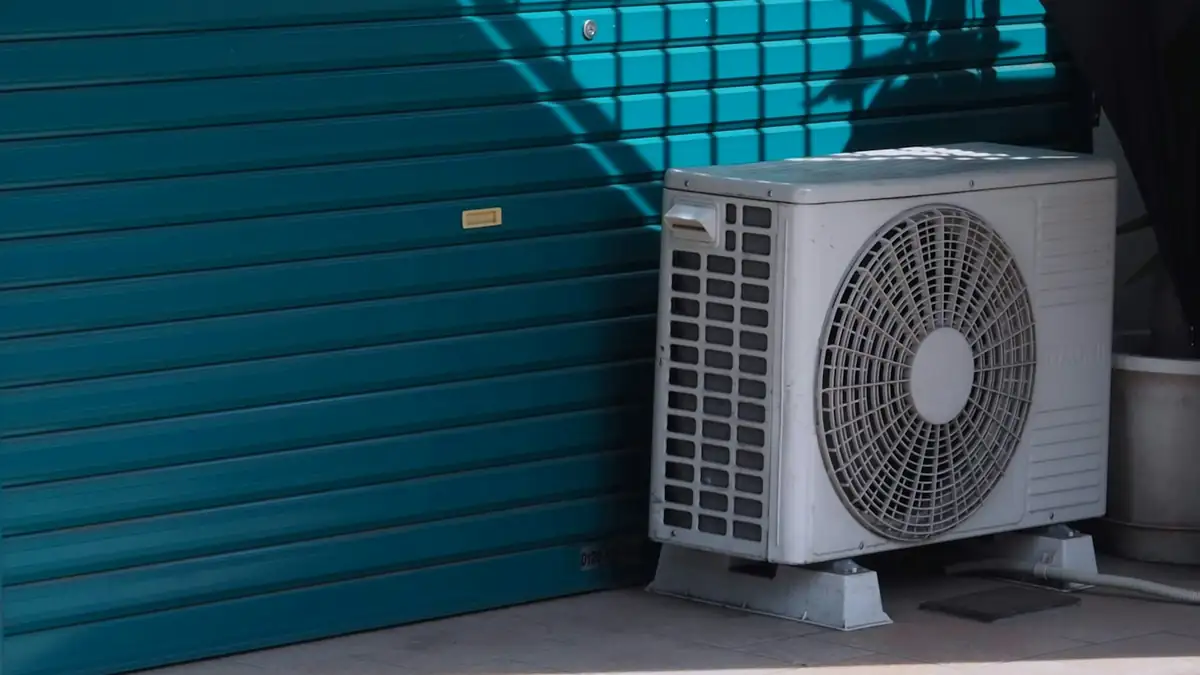
- Look at the outdoor unit. Is the fan spinning? Is the coil packed with dust or blocked by plants?
Don't open the electrical panel on the outdoor unit. Capacitors hold a charge even with the power off.
What a repair costs
Fixr's 2026 figures put most AC repairs at $250 to $700, with a $375 average. This Old House says most homeowners pay $150 to $650 for common fixes. Those are national figures, not a Tucson quote. Most companies also charge a diagnostic or trip fee; ask what it is and whether it comes off the repair. Full cost breakdown, or check a quote you already have: is this AC quote fair?
When to stop repairing
If the system is past 12 to 15 years and the repair is a compressor or a coil, I'd get a replacement price before approving the repair. How to decide.
Questions Tucson homeowners ask
Why is my AC running but blowing warm air?
Common causes are a failed capacitor or fan motor on the outdoor unit, a frozen indoor coil from a dirty filter, low refrigerant from a leak, or a thermostat set to fan only. Check the filter and the breakers first.
Why does my outdoor AC unit hum but not start?
A weak or failed capacitor is a common cause. It holds an electrical charge even with the power off, so leave it to a technician.
Is this for car air conditioning?
No. This site is for home air conditioning and heating. For a vehicle, including a Hyundai Tucson, you need an auto repair shop.